For Over 50s, Stepping Down the Career Ladder Can Be a Choice, Not a Failure
By Pete Tsakissiris
“I’m happy to take a less senior role. I just want to work.”
Through the work we’ve been doing on Ovee’s Over 50 Initiative, I’ve heard some version of that sentence from dozens of experienced professionals.
And I’ve heard the responses they often get:
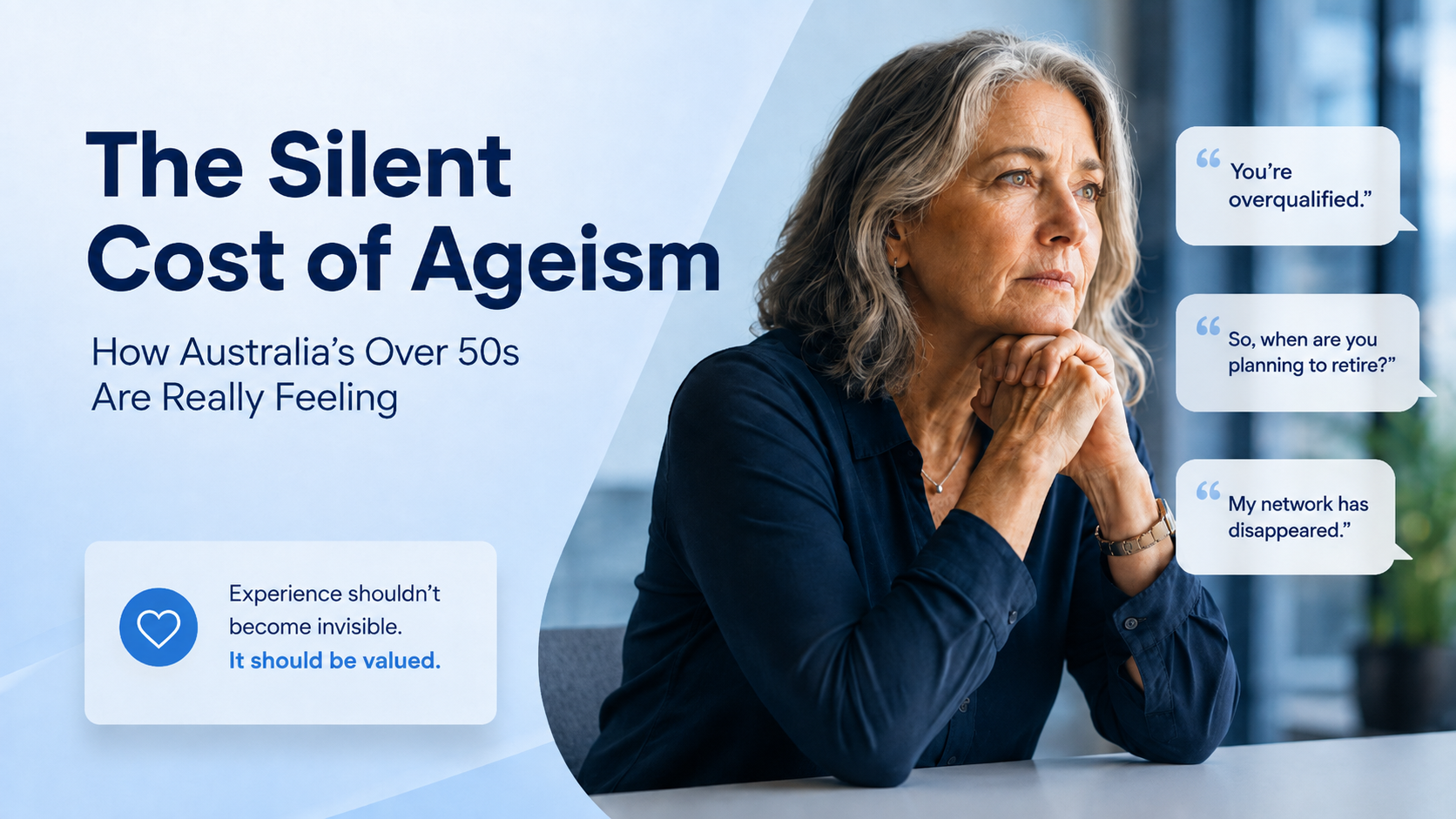
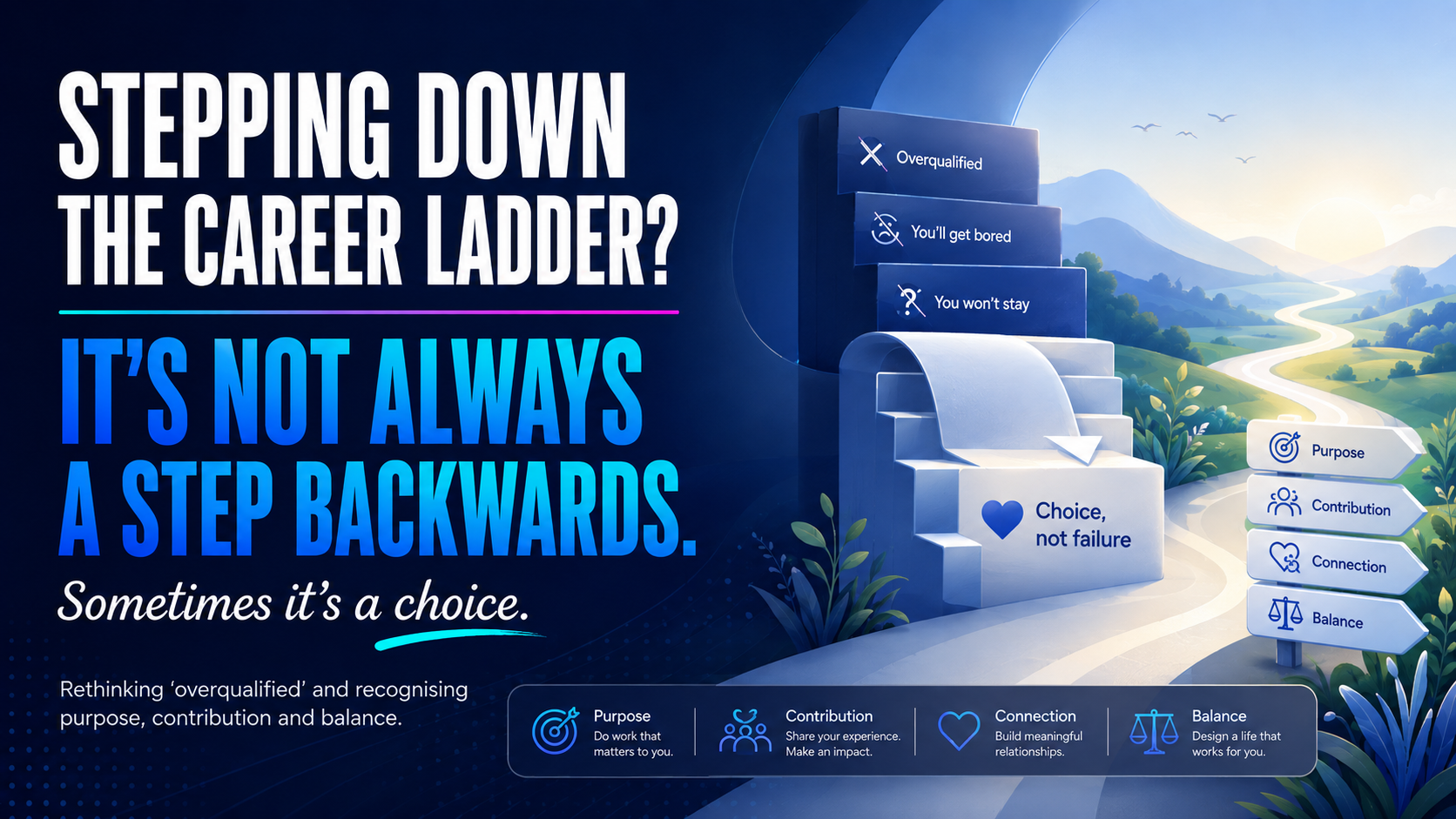
“You’re overqualified.” “You’ll get bored.” “You won’t stay.” “The role isn’t senior enough for you.”
The more people I speak with, the more I think our traditional approach to recruitment understands one direction of a career far better than the other.
We understand climbing the career ladder. We don’t always understand why someone would choose to step back down it.
For most of our working lives, we’re taught that success moves one way: up. A bigger title, more responsibility, more money, greater expertise or the next career milestone.
Our recruitment systems tend to understand that journey.
But when someone deliberately wants to move in the other direction, we don’t seem to understand it quite as well.
It could be a Program Director applying for a Project Manager role. A team leader wanting to return to hands-on work. An experienced specialist choosing a role with less responsibility. Or simply someone who has reached a stage where they no longer want their career to dominate their life.
The questions start:
Why would they want this? Will they get bored? Will they leave when something better comes along? Can they really be happy earning less?
Eventually, we land on the word that can end the conversation:
Overqualified.
Stepping down can be a deliberate career choice
Someone in their 50s or 60s may have spent decades building their career.
They may have moved into senior leadership, managed large teams, become a highly experienced specialist, built deep technical expertise or simply taken on greater responsibility over time.
At this stage of their career, their definition of success may have changed.
They may no longer be looking for the next promotion, bigger title or higher salary. They may be looking for purpose, connection, flexibility and the opportunity to contribute.
They may genuinely want a role with less responsibility or simply work they enjoy and find meaningful.
And this doesn’t only apply to executives.
It can apply to anyone who has spent decades building experience and has reached a point where purpose, contribution and balance matter more than the next rung of the ladder.
There’s another part we sometimes overlook.
If someone chooses to return to work they performed 10, 15 or 20 years ago, they’re not returning as the same person.
They’re bringing all the experience they’ve accumulated since.
They recognise problems earlier. They understand people and stakeholders. They’ve made mistakes and learned from them. They know what works and what doesn’t.
Why should all that additional experience count against them?
There are also signs of just how challenging the employment market has become for older Australians.
Roy Morgan’s employment estimates showed the unemployment rate for Australians aged 50+ increased from 6.8% to 8.6% in the three months to May 2026.
Research released in 2025 by the Australian Human Rights Commission and Australian HR Institute also found that 24% of surveyed HR professionals considered workers aged 51–55 to be “older”, compared with just 10% in 2023.
The Australian Human Rights Commission’s National Prevalence Survey of Age Discrimination in the Workplace found that 27% of Australians aged 50+ surveyed had experienced age discrimination at work in the previous two years. Of those who experienced age discrimination, one-third gave up looking for work as a result.
For many experienced professionals, the barrier isn’t necessarily capability. It can be the assumptions made about what they want.
Purpose can become more important than position
This is what I think employers and recruiters need to understand better.
Priorities can shift as we get older.
For some people, success still means the next big leadership role or career opportunity.
For others, it means mentoring younger colleagues, being part of a team, solving interesting problems, doing hands-on work again, having more flexibility or simply feeling useful and valued.
That’s not a lack of ambition. It’s a different definition of success.
Less about money, title and the next promotion.
More about purpose, contribution, connection and balance.
It’s why I’ve become increasingly uncomfortable with the word “overqualified”.
There are legitimate questions to ask when someone applies for a role with less responsibility or seniority than they’ve previously held.
Will the salary work? Will they enjoy it? Are they likely to stay?
Those are fair questions.
But ask them. Don’t decide the answer on the candidate’s behalf.
What we’re building
This is a big part of why we’re launching the Ovee Over 50 Initiative.
Over the past few months, we’ve been listening to experienced professionals about how hard the employment market can become once you’re over 50.
And it keeps coming back to the same assumptions:
Too experienced. Overqualified. Too senior. Won’t stay.
We want to challenge that.
The initiative is about helping experienced professionals get seen, get supported and get connected to organisations that value what they bring.
It’s also about helping employers recognise that careers don’t always need to keep moving upwards.
And you don’t need to have reached the top of the corporate ladder to decide you no longer want to keep climbing it.
Sometimes an experienced professional simply wants to use what they’ve learned, do good work and contribute.
Stepping down the career ladder isn’t always a step backwards.
Sometimes it’s a deliberate choice about what matters most in the next stage of your life.
Before we call someone overqualified, maybe we should just ask them what they want.
Sources
Roy Morgan Research, employment estimates, May 2026.
Australian Human Rights Commission & Australian HR Institute, Older and Younger Workers: What Do Employers Think?, 2025.
Australian Human Rights Commission, National Prevalence Survey of Age Discrimination in the Workplace, 2015.